Fluorescent Fluorite
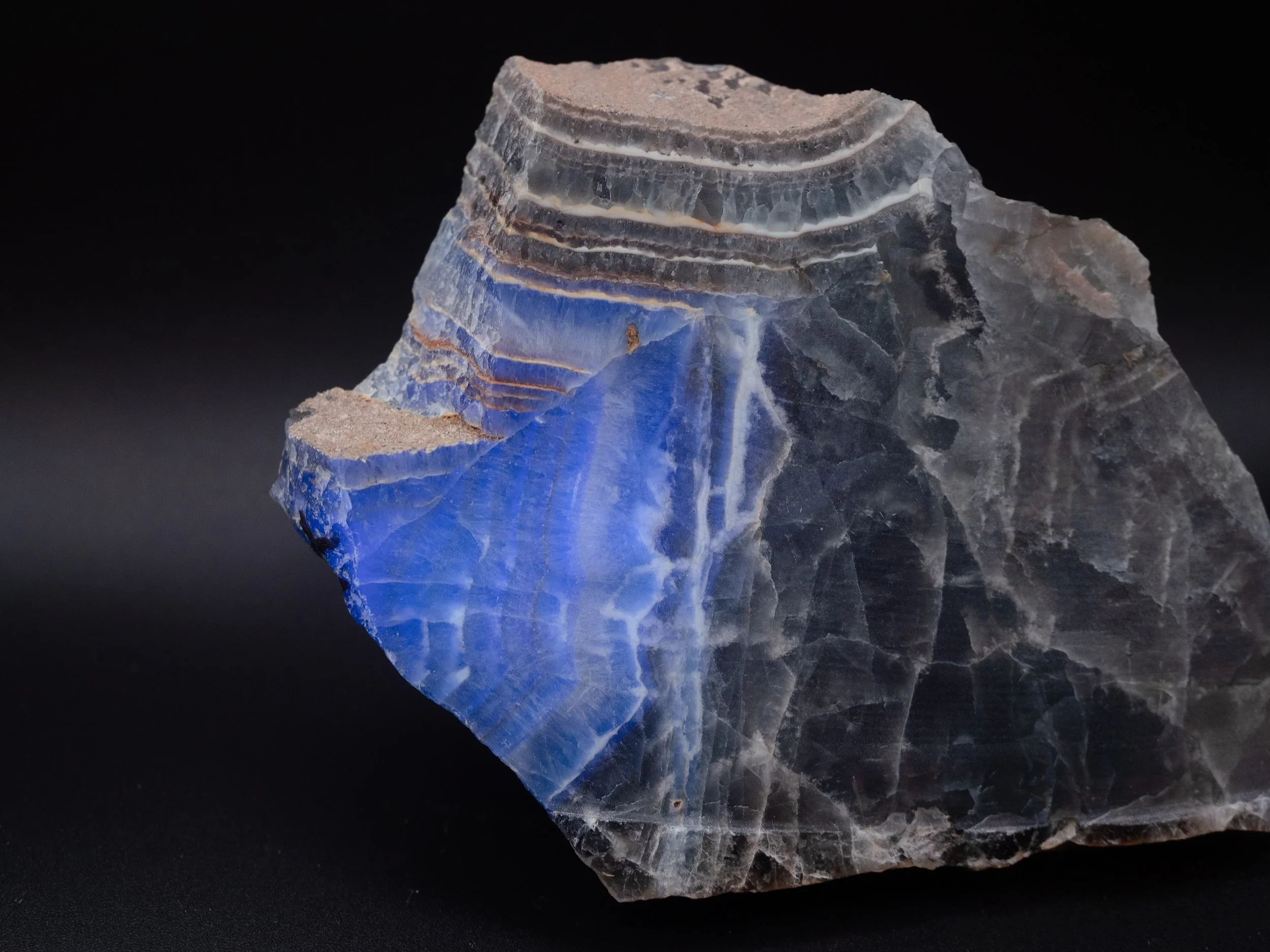
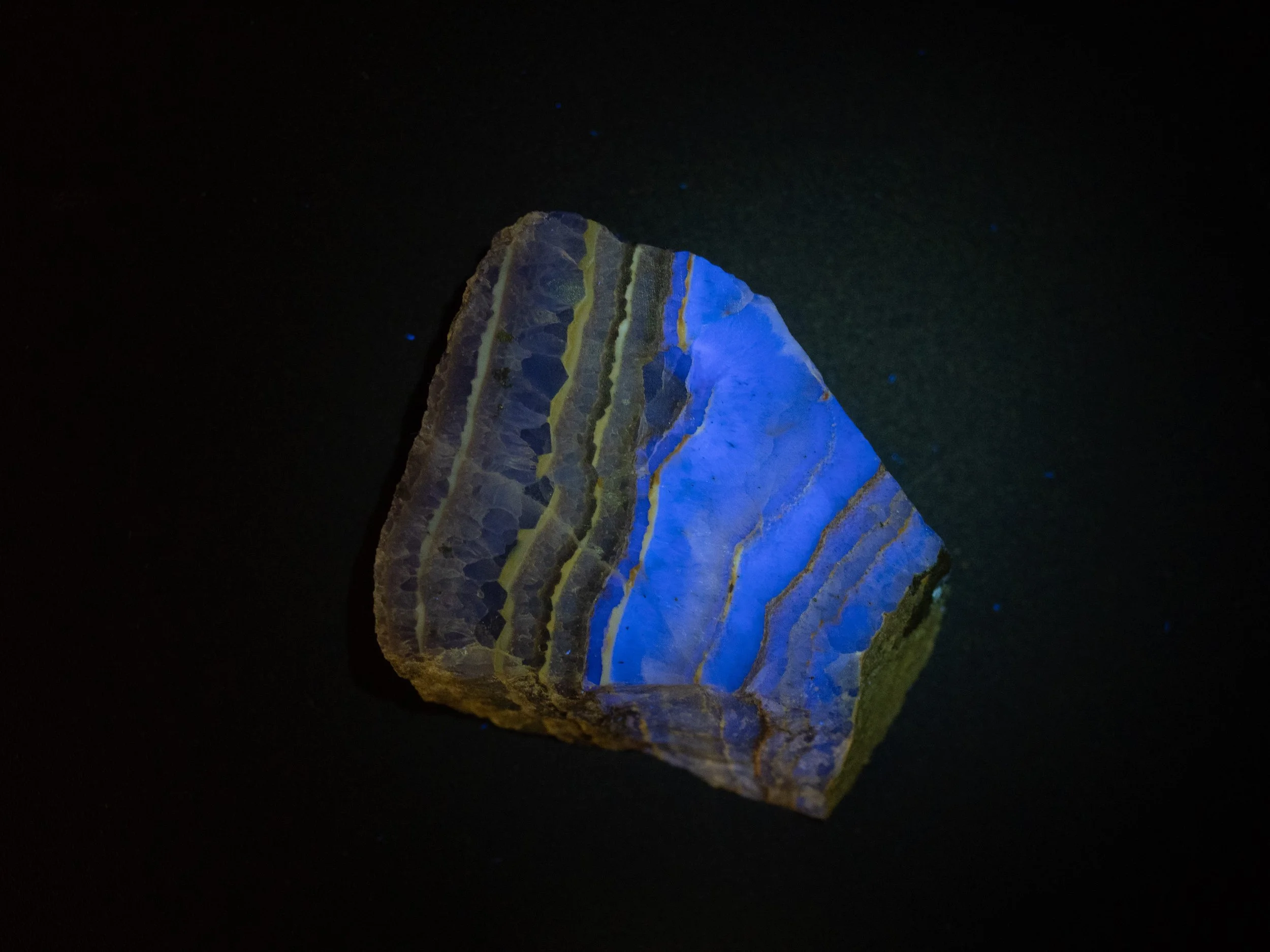
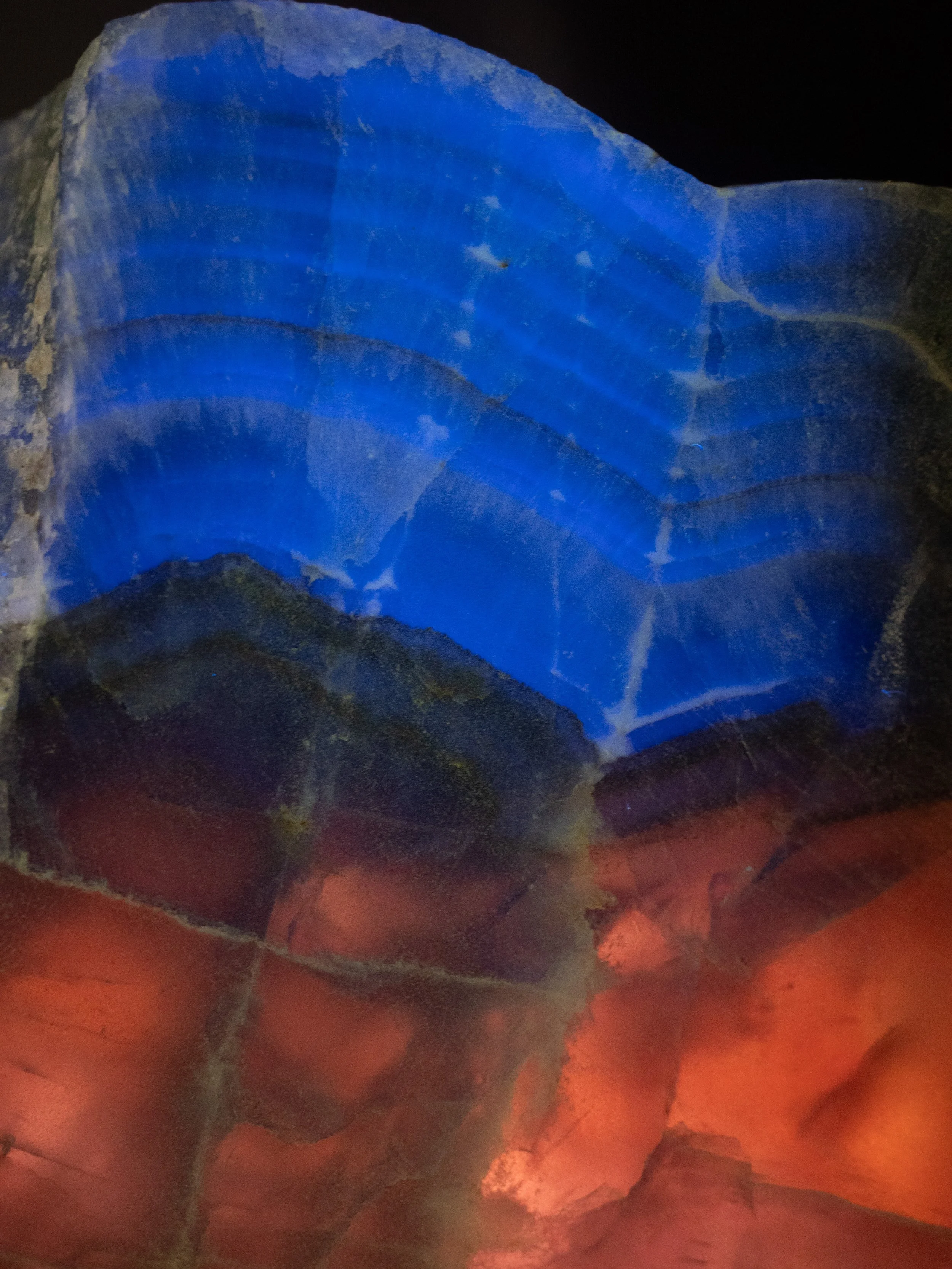
Fluorescence gets it’s name from fluorite. About 15% of minerals fluorescence under UV light. The phenomenon is a story of mineral activators, quenchers and structural defects.
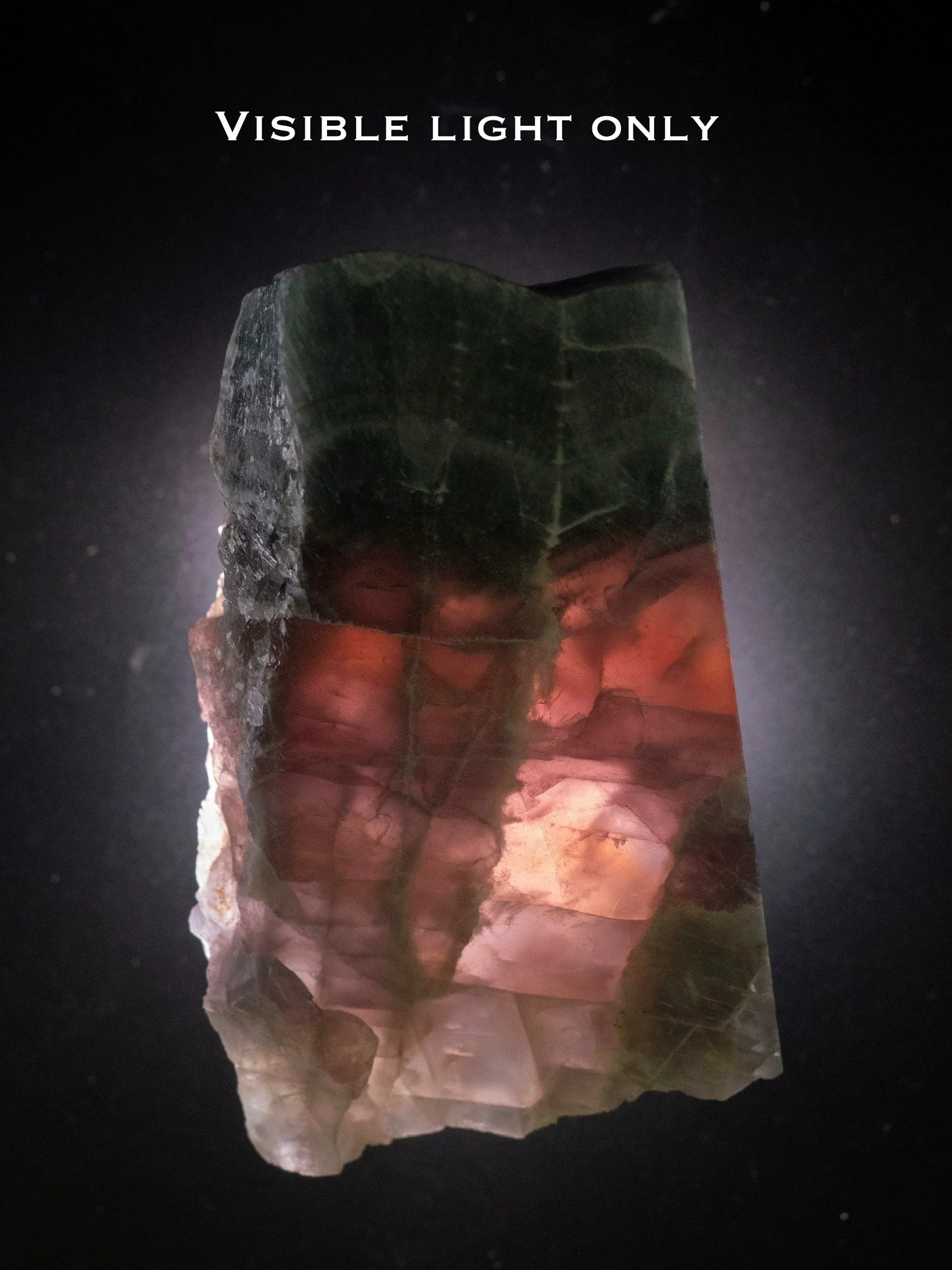
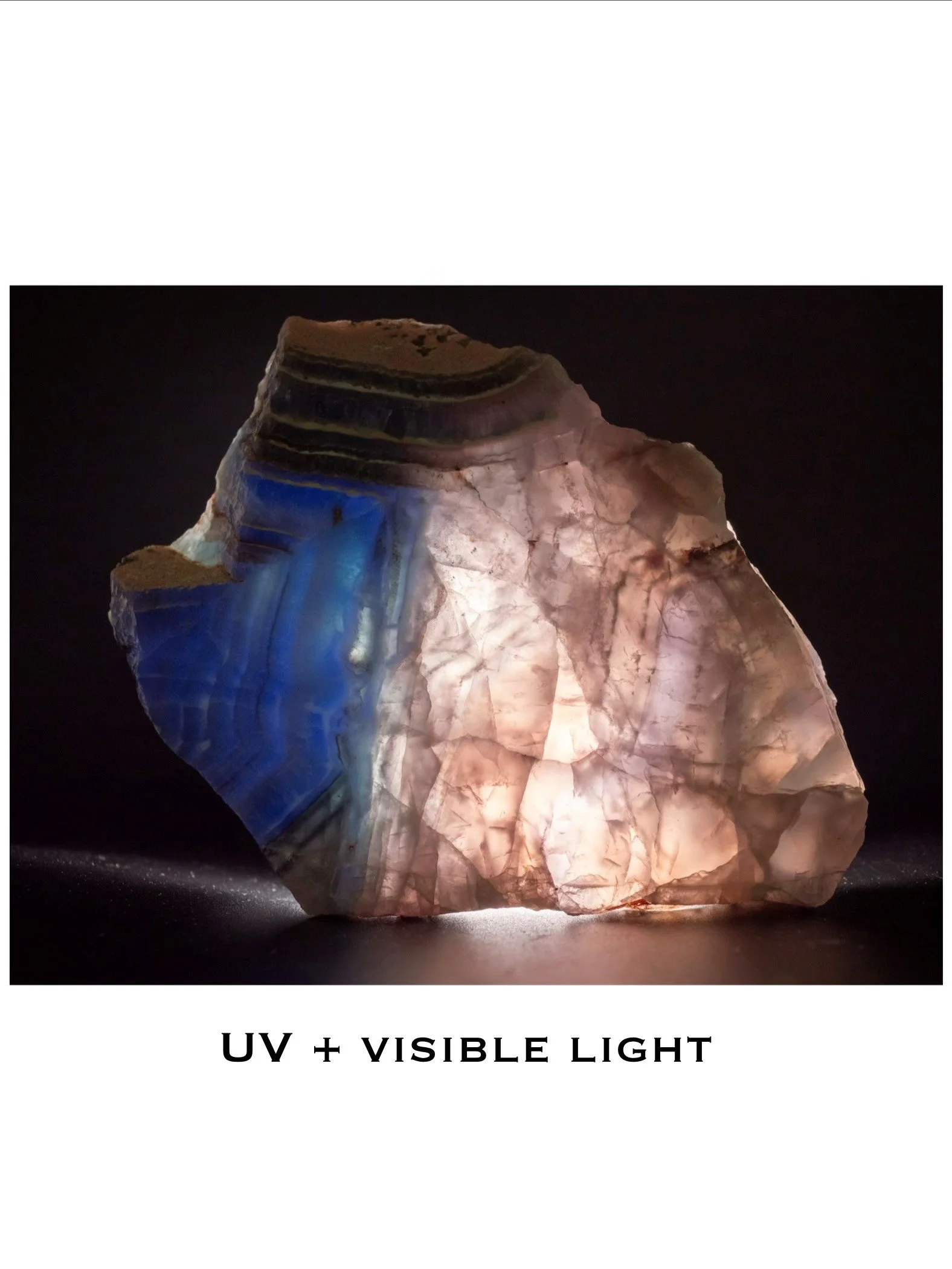
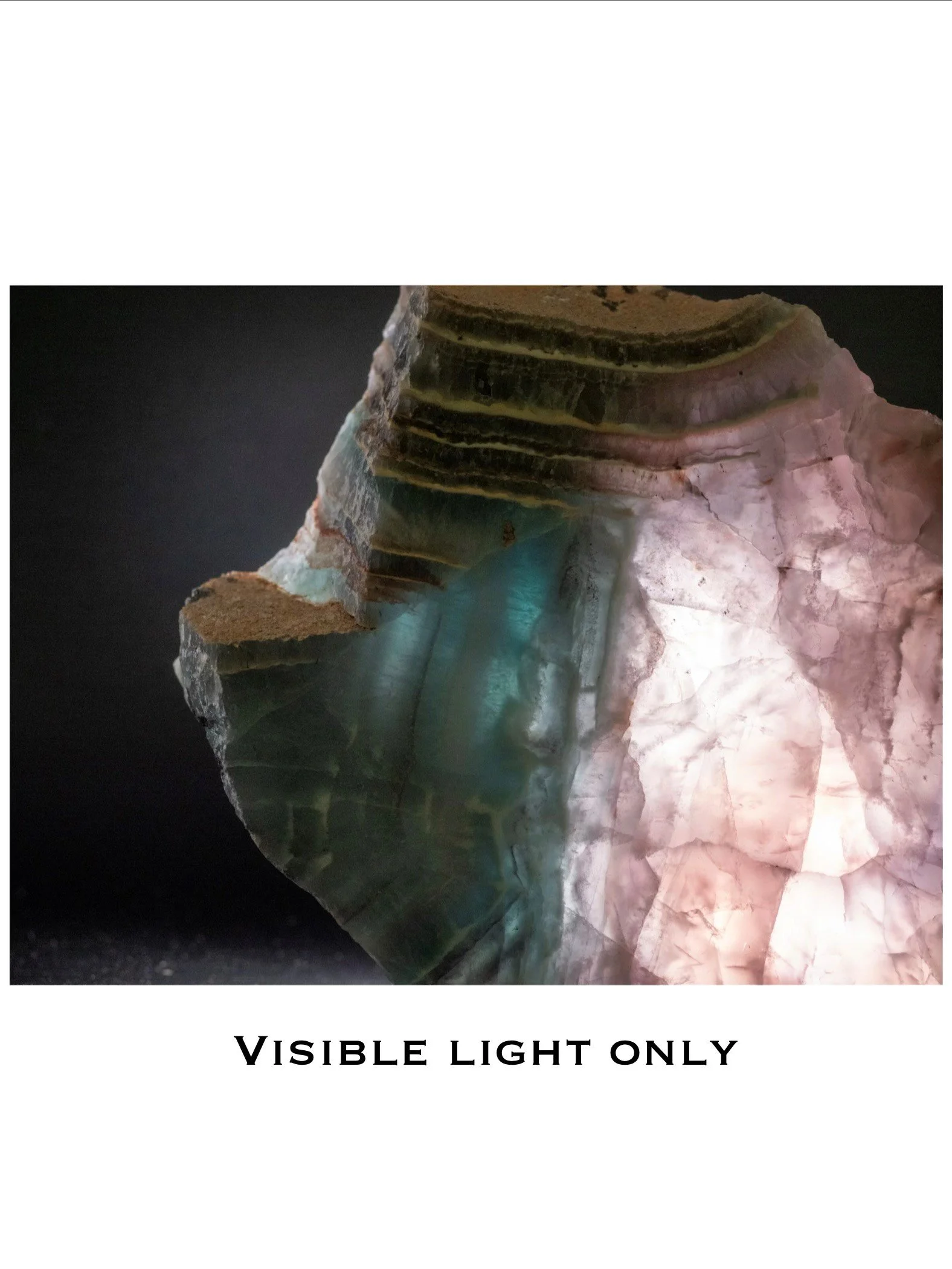
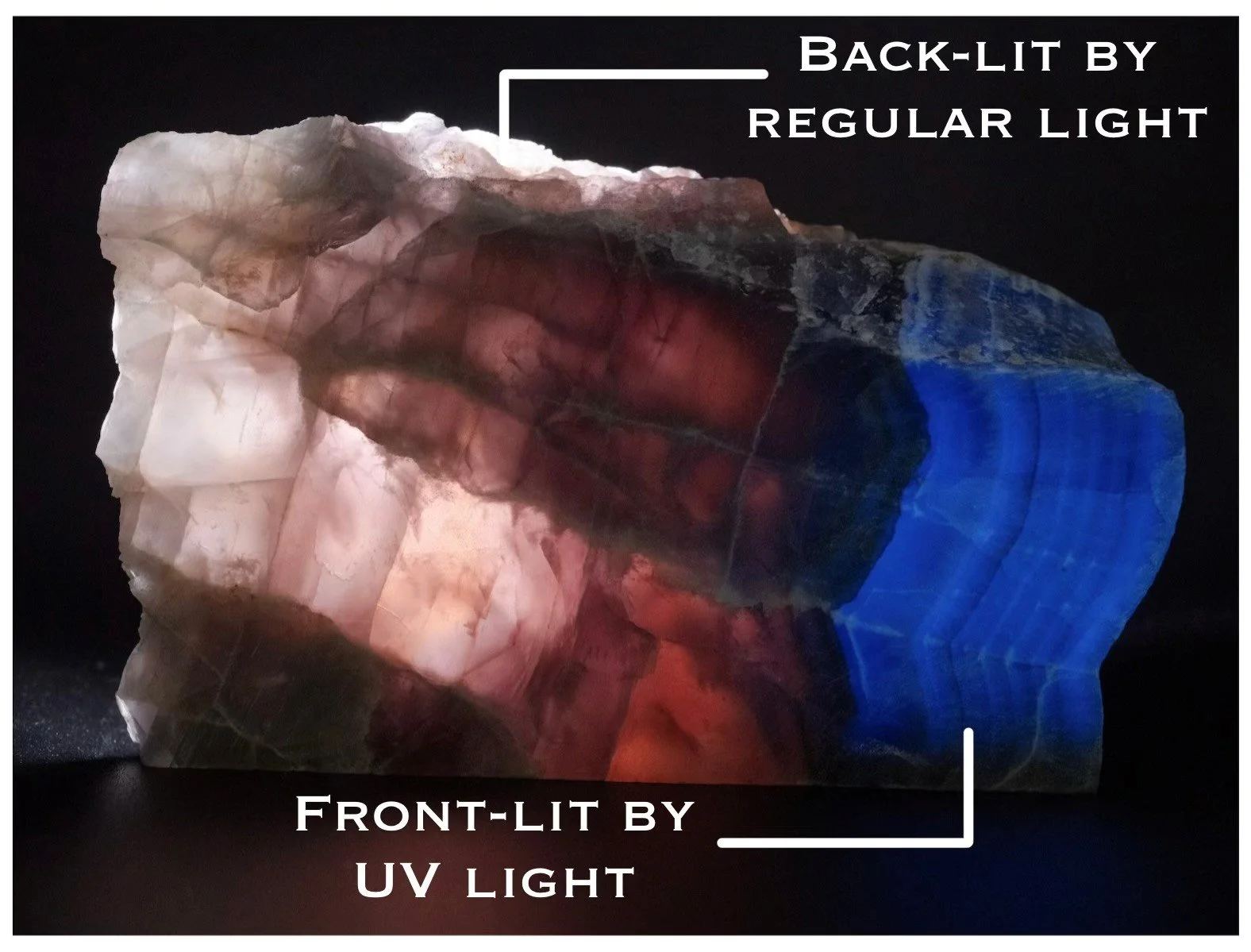
The difference between UV light and light within the visible spectrum is the latter is reflected back at the same wavelength as it is emitted (In my setup normal light is mostly passing through the fluorite). UV light gets absorbed and reemitted at a different wavelenght. It happens when electrons temporarily jump up to a higher orbital within the mineral’s atomic structure, then jump back down while releasing a small amount of light/energy in the process.
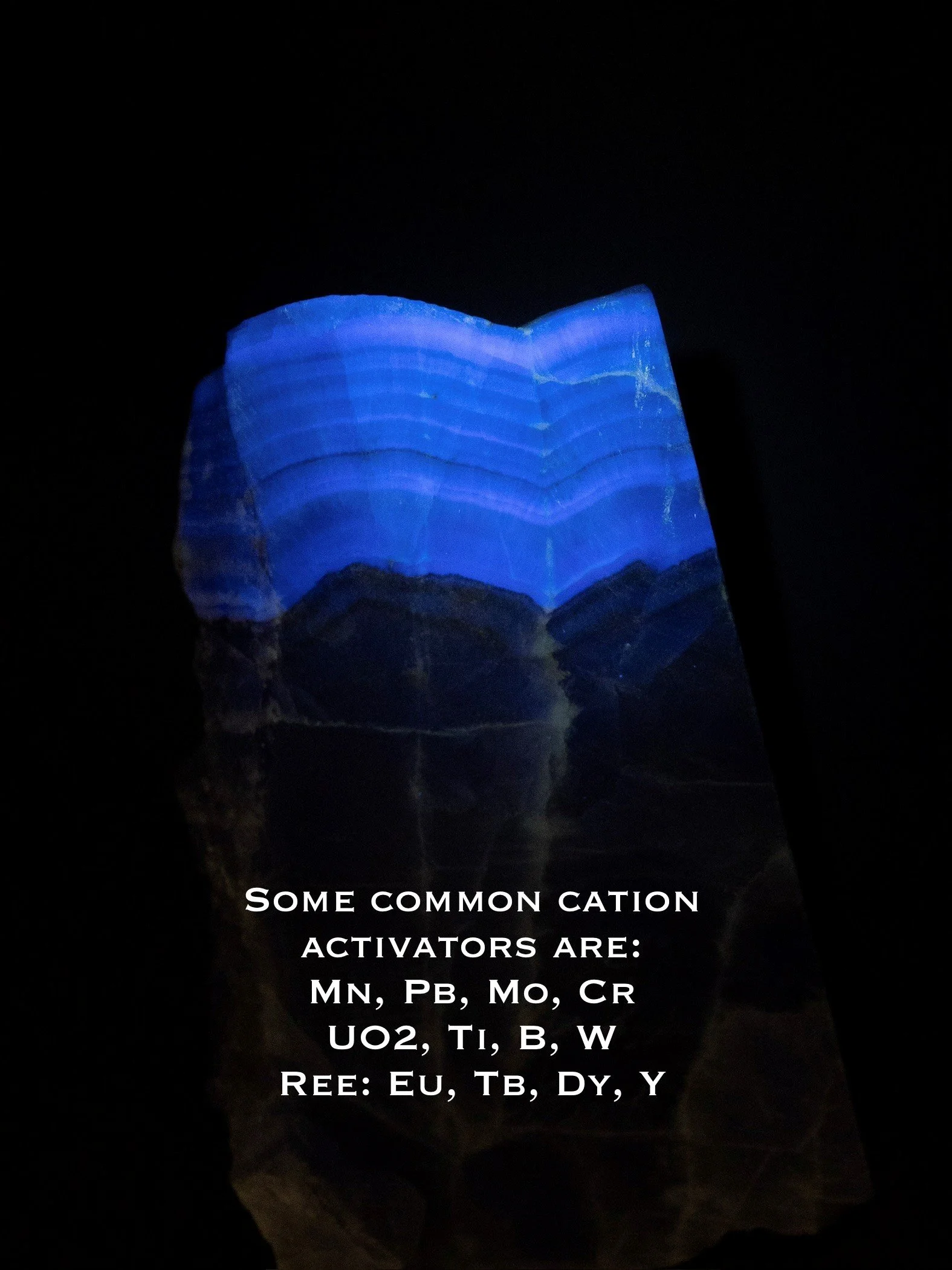
Many factors contribute to fluorescence. The main contributors are certain elements (activators) that have the ability to absorb UV light and reemit it. They are present as trace elements, substituting for regular atoms inside the crystal structure. They are typically cations of metals.
If certain fluorite do not fluoresce, does fluorite simply act as a passive box holding the trace elements then? The answer is it plays an active and critical role, it’s specific structural geometries and intrinsic crystal defects directly influence, enable, and sometimes independently cause the glow. For example, when Eu 2+ replaces calcium Ca 2+ in fluorite (CaF2), it is surrounded by eight fluorine anions (F-) positioned at the corners of a cube. This specific geometric arrangement creates a crystal field that shifts the electron energy levels of the europium ion”.
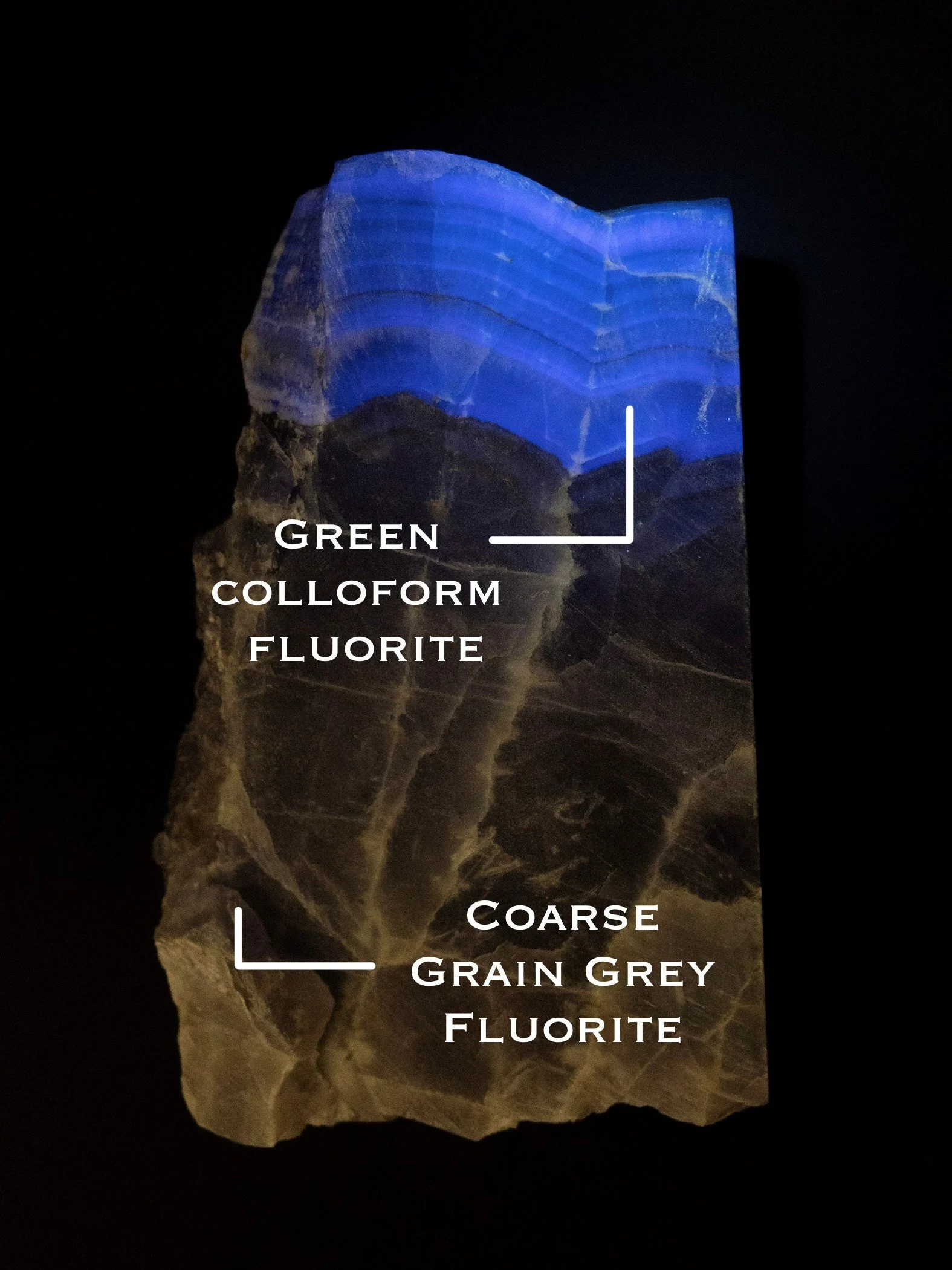
Fluorescence can also occur without traditional trace metal activators when it undergoes natural underground gamma or electron irradiation (often from nearby thorium or uranium) which displaces fluorine atoms. A negative fluorine ion leaves its spot vacant, a « hole » that traps a free electron. The trapped electrons can absorb UV light and release it as visible light.
Certain elements however can dampen the phenomenon. Quenchers are elements that suppress fluorescence by draining the absorbed energy as heat instead of light. They are Fe, Ni, Co, Cu. In retrospect, fluorescence can be helpful in identifying certain minerals, but the fact it is a rather unpredictable property makes it not always reliable for mineral identification.