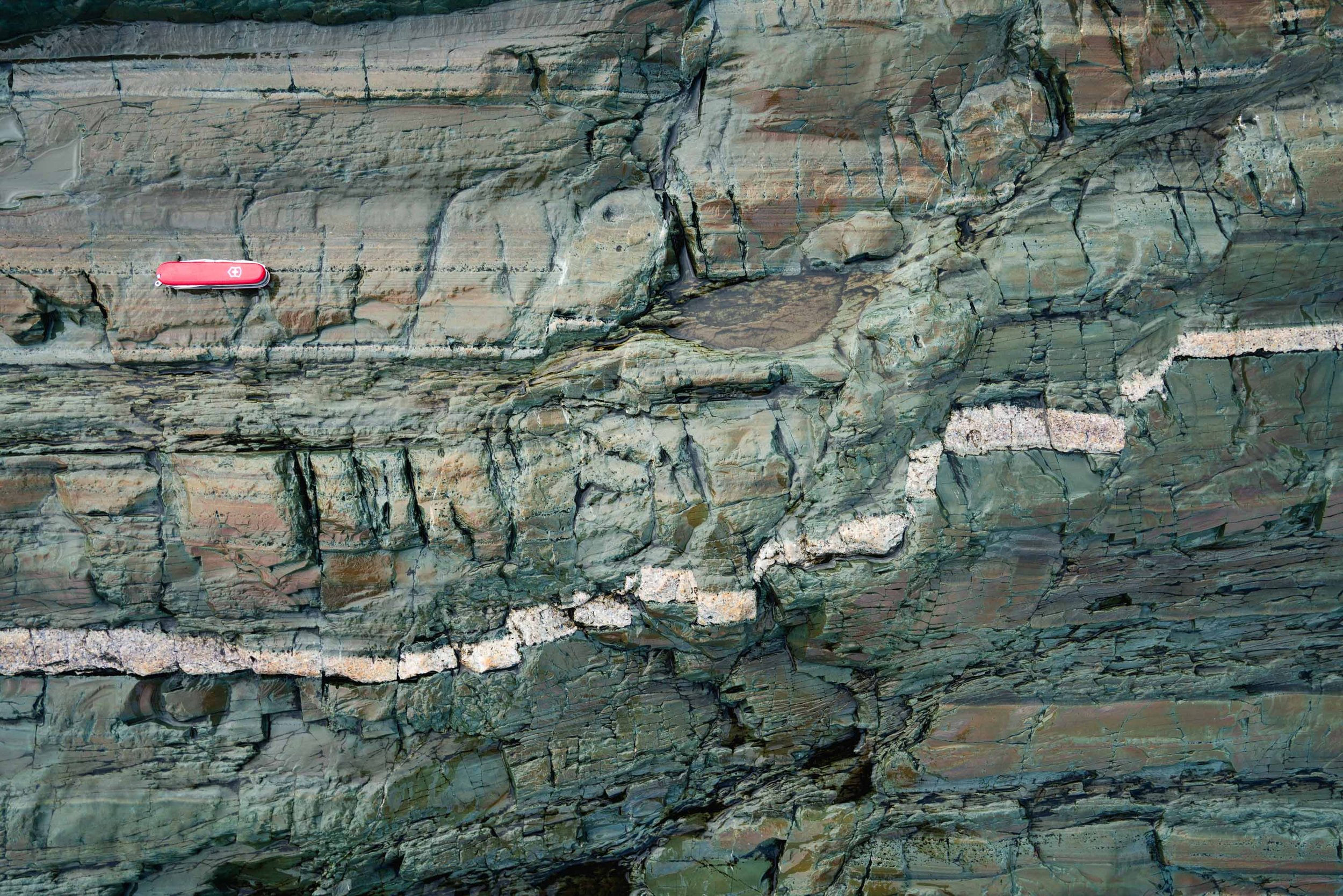
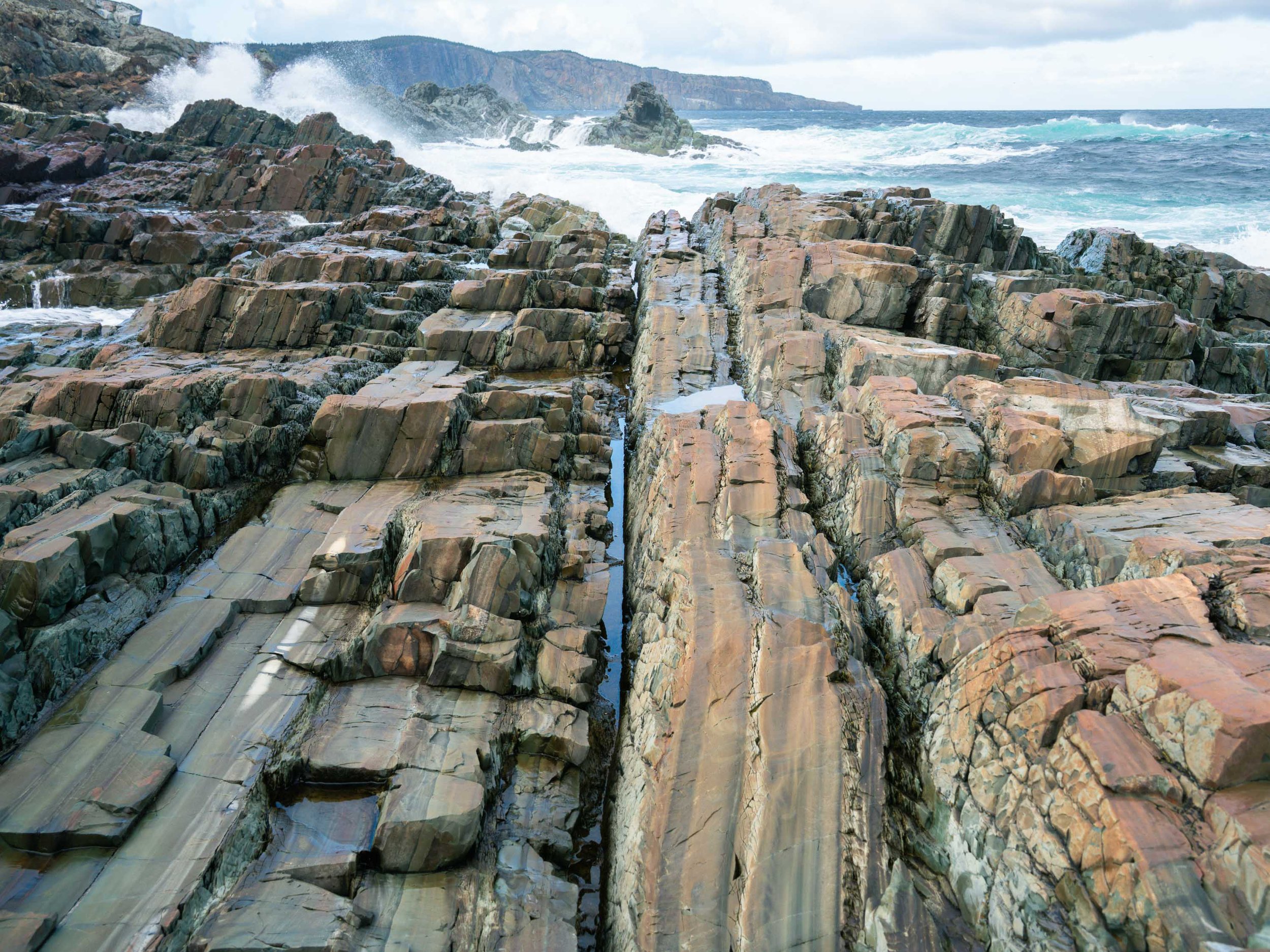
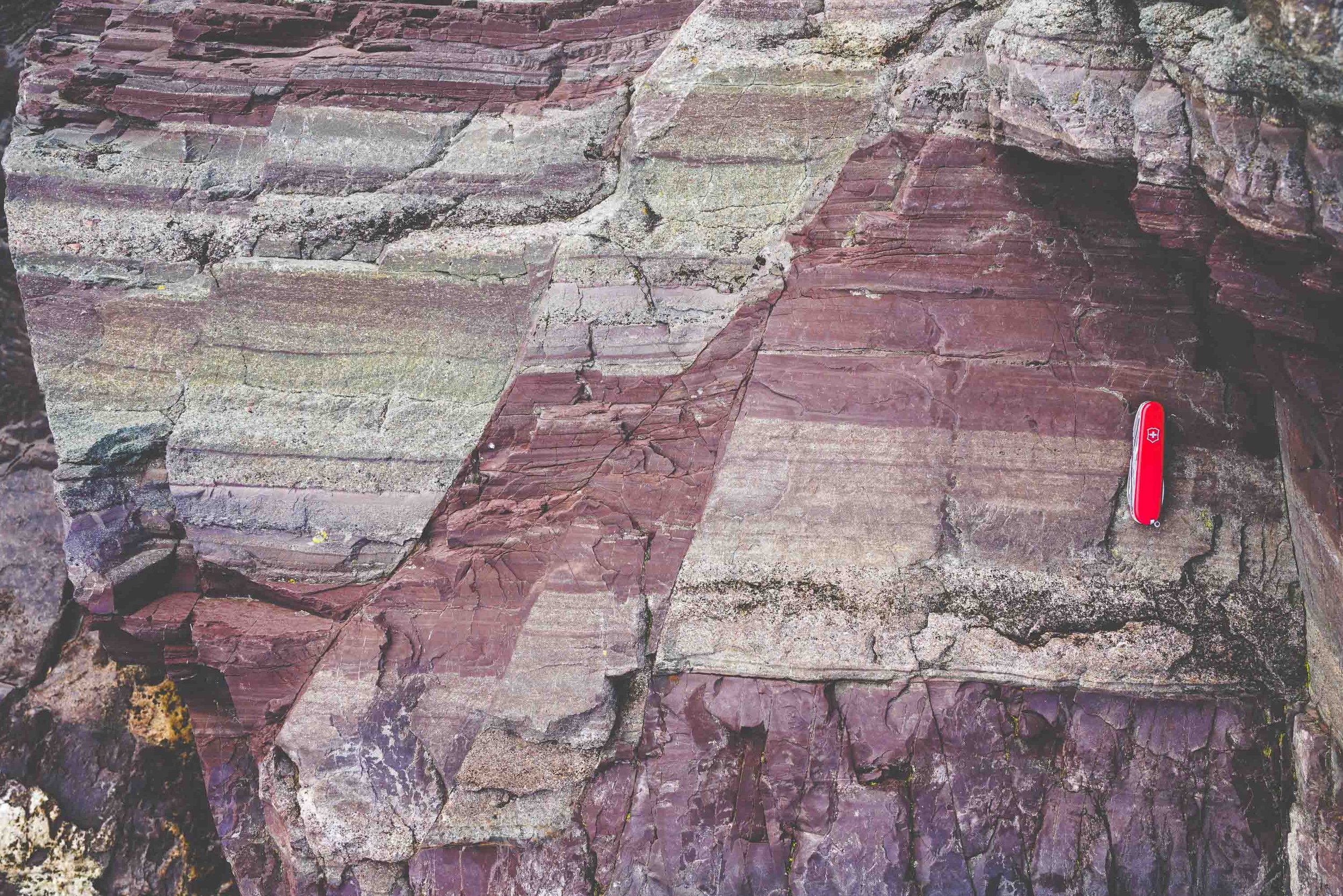
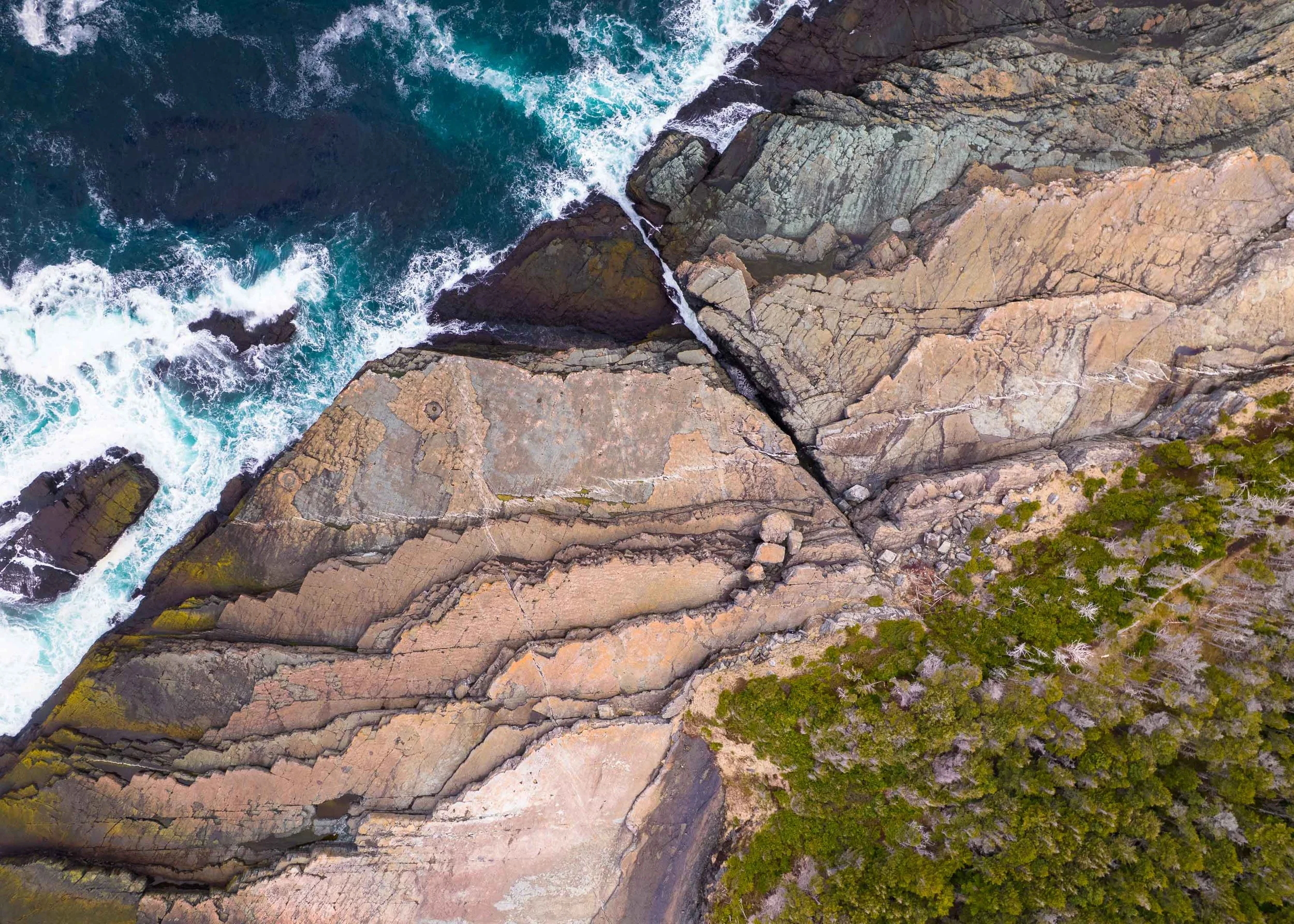
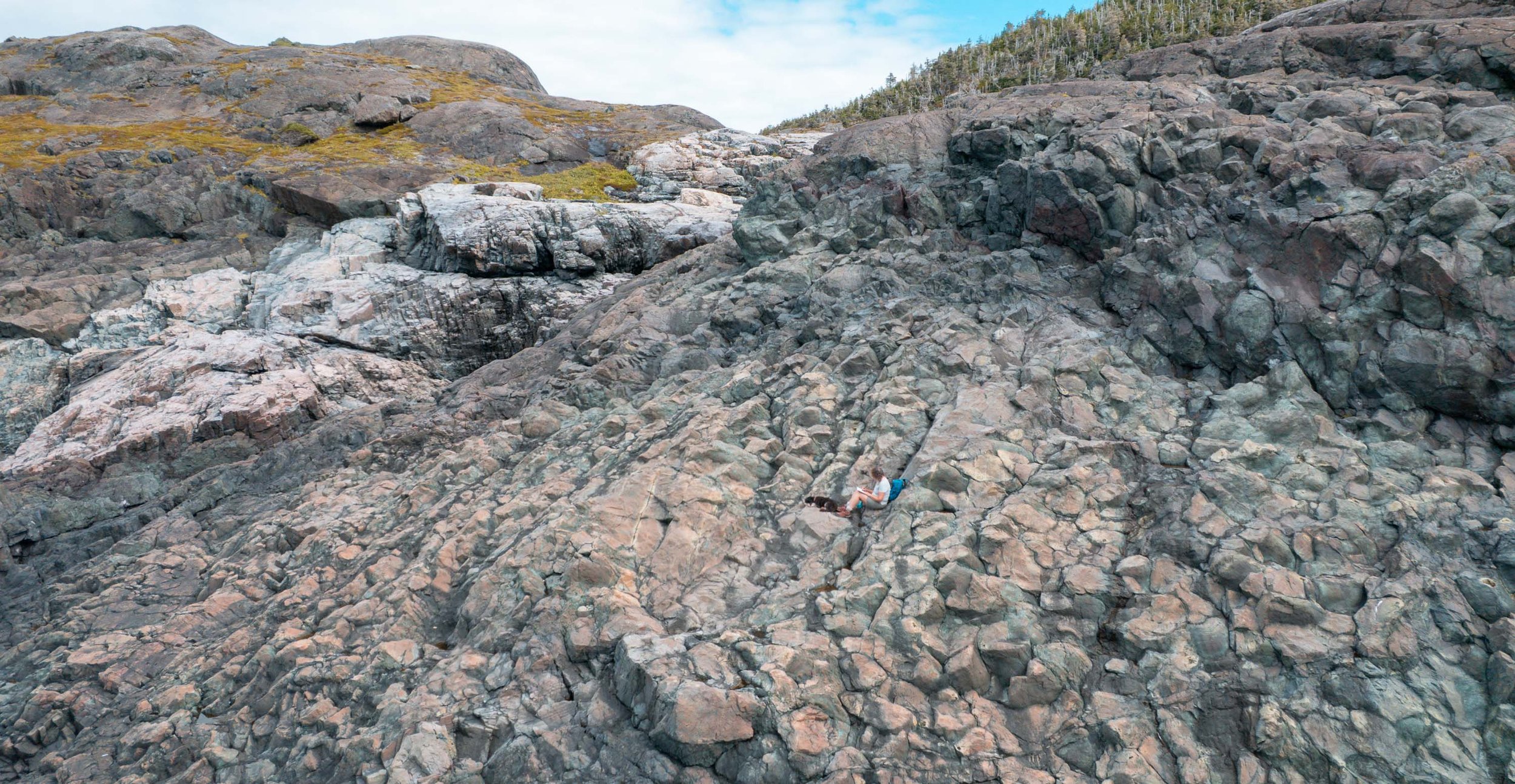
Finding Avalonia is a book project about geology and the arts, more specifically it is a collaboration between visual artist, Joanne Cole and myself. The project is an exploration of a selection of sites from the Avalon Tectonic Zone where rocks are exposed along the Atlantic Coast in eastern Newfoundland. This zone along with the rest of the island of Newfoundland are teeming with an abundance of great geological stories to tell. A small sampling of some of these stories will be included in the book, captured through the eye and hand of a painter, and photographed and explained by me.
Joanne’s work in the Map Room and Archives and Special Collections Division of Memorial University’s library was integral to the development of her art which became a blend of research and field work resulting in paintings of the unique geological structures in the province. The holdings of the Map Room and Archives include the field journals, technical notebooks and maps of James P. Howley, Dr. Harold (Hank) Williams, Arthur Buddington and others from the 19th and 20th centuries. Having access to these materials allowed for inspiration through knowledge of the subject. This has become her artistic process.
Hank Williams as he was known was a geologist who’s work in the Appalachian Mountains from Newfoundland to southeast U.S. was crucial to developing the ground-breaking concept of plate tectonics. His 1967 landmark paper and geological compilation map of Newfoundland represented the first on-land syntheses of an orogenic belt to be placed in a tectonic framework. Dr. King published the most recent compilation map (1988) of the Avalon Tectonic Zone in eastern Newfoundland. King and Williams also worked together on mapping of the Trepassey area in the 1970s, an area that contains the Ediacaran rocks of Mistaken Point. The site contains the oldest known large and architecturally complex organisms in Earth’s history and would later become a UNESCO World Heritage Site, as well as being included on the International Union of Geological Science’s (IUGS) listing of 100 geological heritage sites. It is one of the sites that will be part of the book Finding Avalonia.
finding avalonia