Palaeontologist and geologist Terence Patrick Fletcher was a globally recognized authority on Cambrian stratigraphy and trilobite faunas. His landmark research that was part of his 1972 Ph.D. dissertation at Cambridge University was based on Cambrian strata exposed at Cape St Mary’s Peninsula. His work there and in other places in Newfoundland was foundational to defining Cambrian marine life and trilobite morphology, as well as reshaping our understanding of the Cambrian Period.
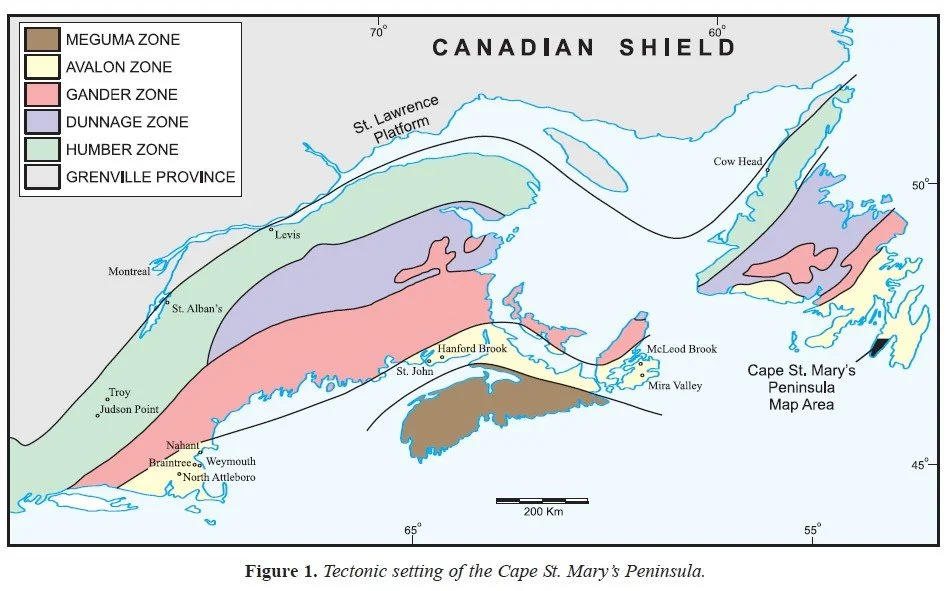
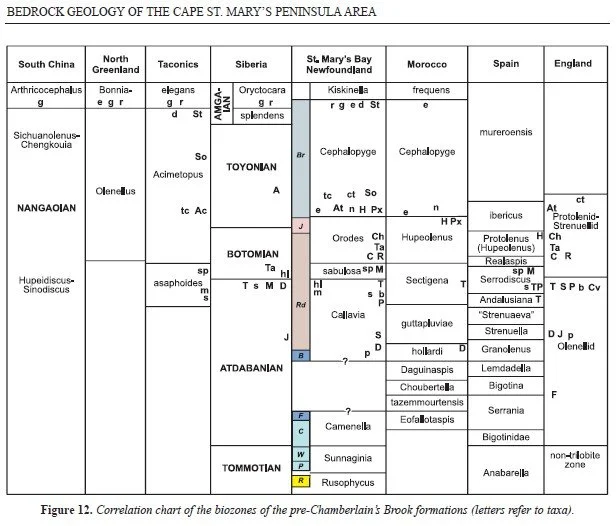
Fletcher documented a thick, well-preserved, and continuous record of Cambrian life which filled critical historical gaps in the transition between the Early and Middle Cambrian periods. He mapped the evolutionary lines of trilobites and established high-resolution biostratigraphic zonation. His classification of specific trilobite zones (such as the Paradoxides species) provided the essential reference standard used to correlate the tectonic Avalon Zone with coeval Cambrian sequences across western Europe, North Africa, and the northeastern United States.
He painstakingly untangled how trilobite species changed through different growth stages and environmental variations, which corrected centuries of taxonomic confusion caused by tectonically distorted or flattened fossils within cleaved mudstones (deformed rock). Trilobites were foundational to defining Cambrian biostratigraphy because they emerged as one of the most successful early arthropod during biology’s big bang, the Cambrian Explosion. They evolved rapidly into many different variations and were abundant in an extensive range of environments. This allowed geologists to divide the Cambrian period into precise, globally correlatable zones.
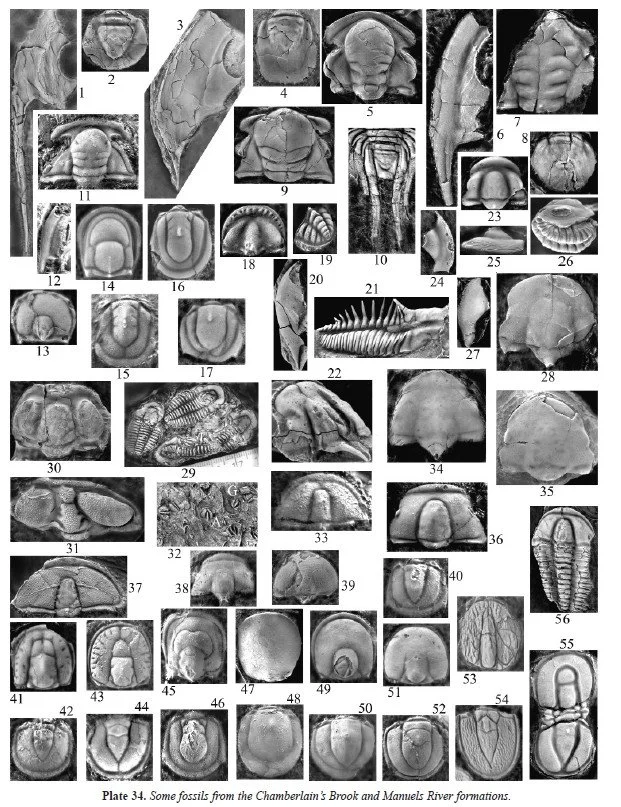
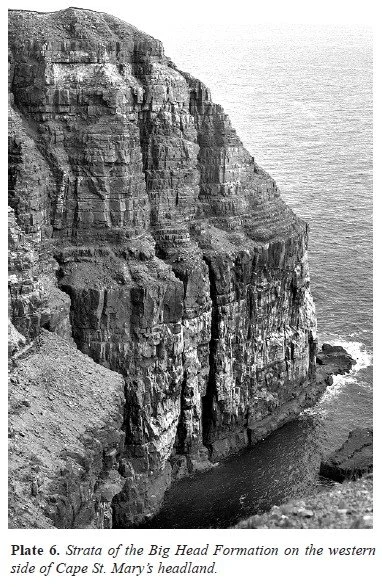
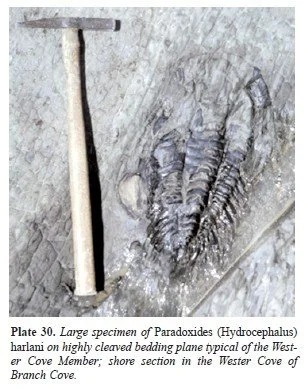
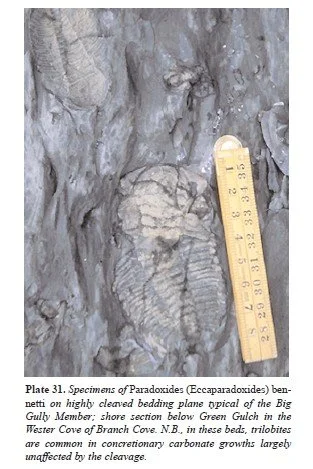
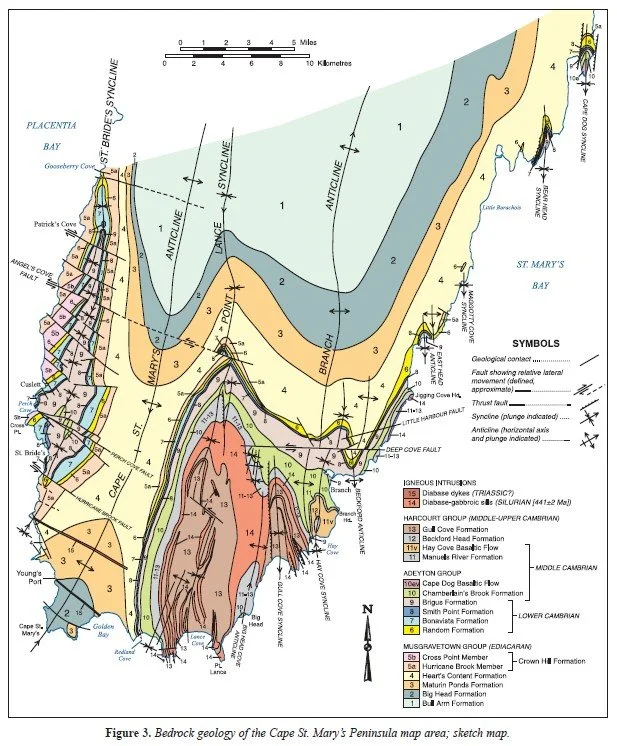
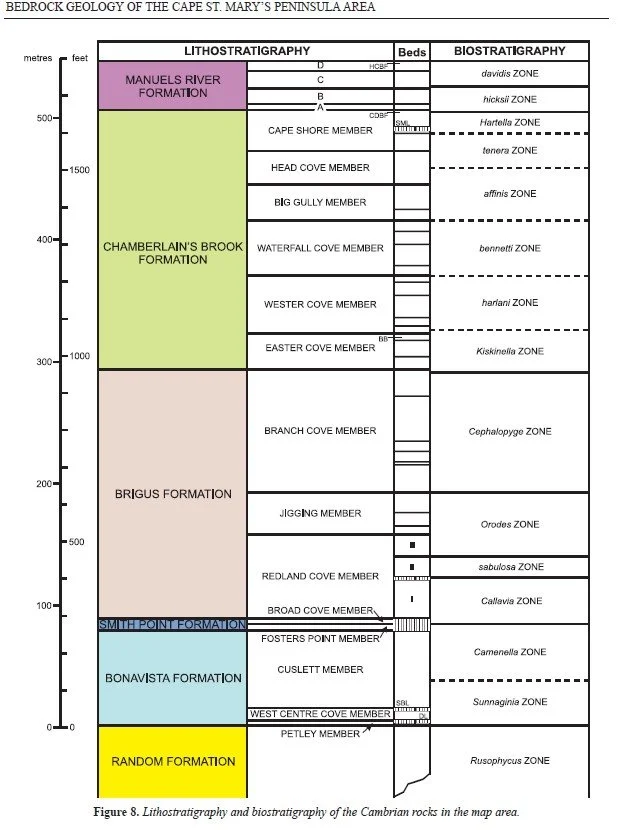
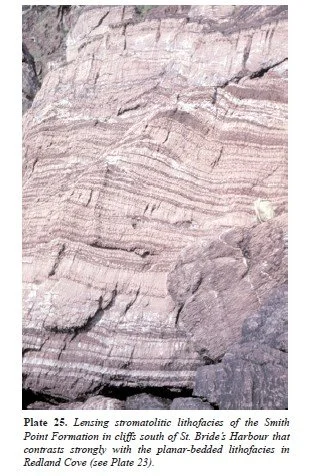
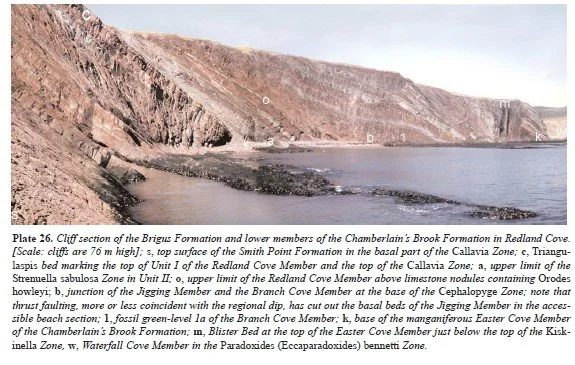
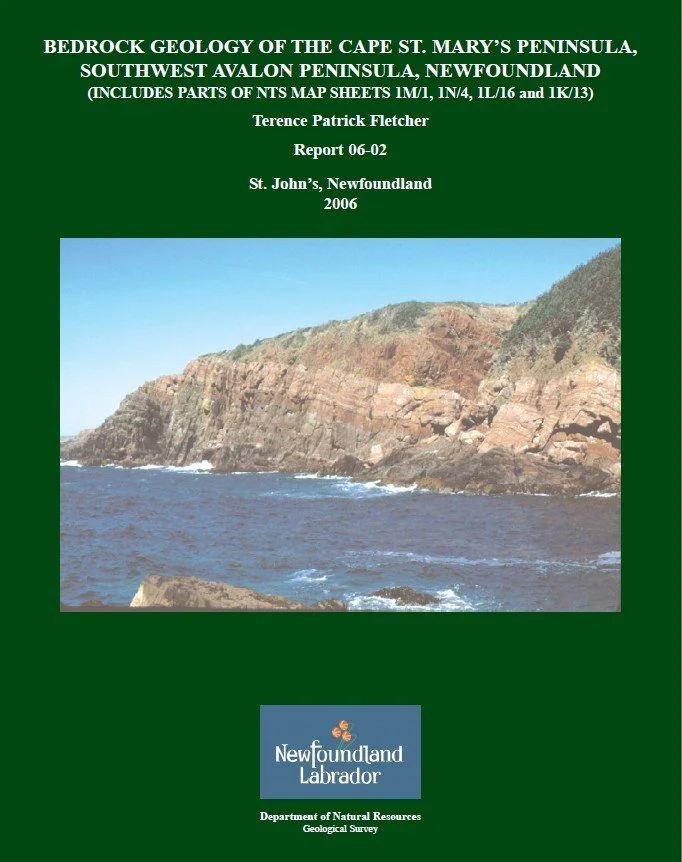
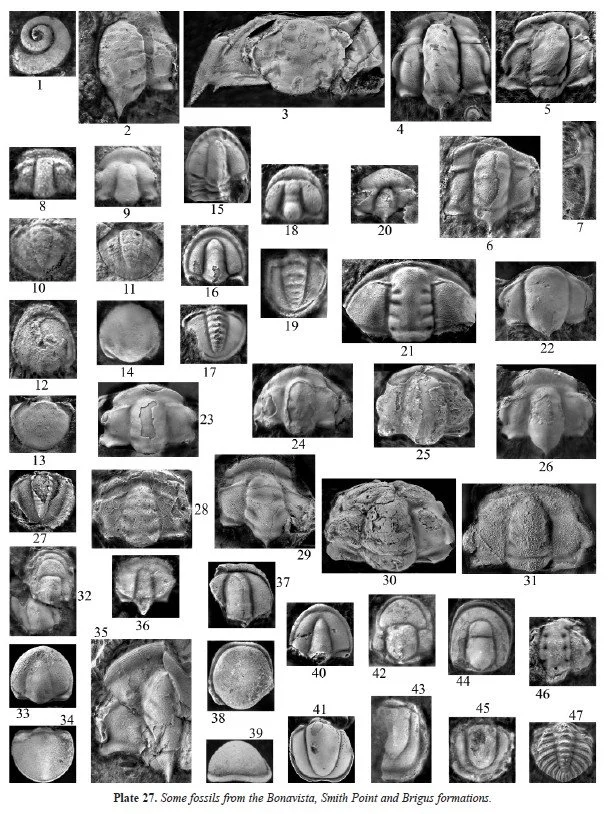
Fletcher had a long and productive career and participated in international Cambrian working groups globally in places such as Morocco, Greenland and Scotland. He passed away in 2025. He dedicated much of his career to the British Geological Survey, but maintained his research interests in Newfoundland over the years on his own time. The provincial report containing his work at Cape St Mary’s Peninsula including the diagrams seen here were published in 2006, many years after he had completed his PhD in the area. In his later years, he retired to Bowmont Cottage in Dunbar, East Lothian, Scotland, where he maintained active correspondence with global paleontology circles and managed his extensive private collections under his personal banner, "TeepeeBow".
Another of his major contributions in Canada was on the Burgess Shale in British Columbia, a fossil site made famous due to its preservation of soft body parts like eyes, guts, and brains. Fletcher’s structural mapping provided crucial physical evidence for how the fossils were preserved so perfectly through rapid burial in anoxic conditions. He also worked with Desmond Collins to resolve decades-old structural anomalies to formally redefined how the fossil beds fit into the regional geology of the southern Canadian Rocky Mountains.
Fletcher, T.P. 2006: Bedrock geology of the Cape St. Mary’s Peninsula, southwest Avalon Peninsula, Newfoundland (includes parts of NTS map sheets 1M/1, 1N/4, 1L/16 and 1K/13. Map 2006-02. Government of Newfoundland and Labrador, Department of Natural Resources, Geological Survey, Open File NFLD/2925.
Below you can find drone footage of the beautiful coasts around the southwest side of Cape St Mary’s Headland